1. Target Keyword & Search Intent Analysis
- Primary Target Keyword: Best car polish for red cars
- Secondary Keywords/LSI: how to make red car paint shine, best wax for red cars, red car paint correction, restore faded red car paint, Turtle Wax Color Magic review, polish vs wax, single-stage red paint.
- Search Intent: The user’s intent is Commercial Investigation mixed with Informational.
- Literal Question: “What polish product should I buy for my red car?”
- Underlying Goal: “My red car looks dull, faded, or swirled. What do I need to buy and do to make it look incredibly deep, wet, glossy, and new again?”
- Key Insight: The user is likely a beginner who mistakenly believes a special “red” polish is required. My job is to intercept this misconception, provide authoritative education, and then guide them to the correct products (which are not color-specific) for achieving their goal.
2. Content Gap Analysis
The original article is filled with content gaps and misinformation:
- Lack of Fundamental Knowledge: It fails to explain the critical difference between a polish (an abrasive that corrects) and a wax (a protective layer).
- Promotion of Gimmick Products: It recommends “color-matched” waxes, which are filler-heavy products that offer a temporary, low-quality fix. No professional uses these.
- No “How-To” Information: It doesn’t explain the process of polishing, which is far more important than the specific product.
- Absence of Expertise: There’s no mention of single-stage vs. clear-coated red paint, oxidation, swirl marks, or the science of light reflection on paint.
- Poor Structure: The buying guide is generic, and the FAQ is unhelpful and poorly written.
- Zero E-E-A-T: It demonstrates no experience, expertise, authoritativeness, or trustworthiness.
The rewritten article will address all these gaps, establishing itself as the most comprehensive and trustworthy resource on this topic.
3. Fully Rewritten & Improved Article
(Ready to Publish)
Article Title: The Best Car Polish for Red Cars: An Expert Detailer’s Guide (2024)
Meta Description: Stop wasting money on gimmicky colored waxes! A professional detailer reveals the real secret to making red paint look deep, wet, and flawless. Discover the best polishes and waxes for your red car.
(Article Content Begins)
Red. It’s more than just a color; it’s a statement. From the fiery passion of a Ferrari Rosso Corsa to the deep candy apple glow of a classic hot rod, red cars have a unique ability to capture attention and stir the soul. When a red car is perfectly polished, it possesses a depth and wetness that other colors can only dream of.
But when red paint starts to look dull, faded, or covered in a spiderweb of swirl marks, the disappointment is equally profound.
You’re here because you want to restore that head-turning shine. You’ve searched for the “best car polish for red cars,” likely thinking there’s a special, color-infused formula that holds the key. You’ve probably even seen products like Turtle Wax Color Magic on the shelf.
As a professional detailer with over 15 years of experience restoring paint finishes, I’m going to let you in on an industry secret: the best polish for a red car is not red.
The idea of a “colored polish” is one of the biggest myths in car care. These products are a temporary, low-quality shortcut that often does more harm than good. In this definitive guide, we’re going to debunk this myth completely. I will teach you the professional process for making red paint drip with gloss and recommend genuinely outstanding products that will deliver the jaw-dropping results you’re after.
The #1 Misconception: The Myth of “Colored Car Polish”
Before we talk about what works, we must first address what doesn’t. You’ve seen them: waxes and polishes that are dyed red, promising to “match your paint” and “fill in scratches.”
What are these products?
These are not true polishes. A real polish is an abrasive compound designed to permanently remove a microscopic layer of your car’s clear coat to level out imperfections like scratches and swirl marks. Colored products, on the other hand, are primarily filler-heavy waxes or glazes. They are packed with oils, dyes, and soft solids (fillers) that simply try to cover up or “mask” paint defects.
Why are they a bad idea?
- They Don’t Last: The filling effect is extremely temporary. After a few washes or a week in the sun, the fillers wash away, and all those scratches you thought were gone will reappear. It’s a frustrating cycle of disappointment.
- They Attract More Dirt: The oily, waxy fillers can be sticky and often attract more dust and grime than a properly corrected and protected surface.
- They Don’t Build Real Gloss: True gloss comes from making a paint surface perfectly flat and smooth, allowing light to reflect uniformly. Fillers create an artificial, often hazy shine that can’t compare to the real thing.
- They Can Stain Trim: The red dye in these products can easily stain black plastic trim, rubber gaskets, and emblems, creating another problem you’ll have to solve.
The Professional Approach: The secret to amazing paint is a two-stage philosophy: Correction then Protection. You use a true abrasive polish to create a flawless surface, and then you protect that surface with a high-quality wax, sealant, or ceramic coating to lock in the shine.
How to Make Red Paint Truly Shine: Understanding the Process
The stunning gloss you want for your red car comes from creating a perfectly smooth surface. Here’s the professional approach broken down.
Step 1: Paint Correction with an Abrasive Polish
This is the “polish” stage, and it’s where the magic happens. A true car polish contains microscopic abrasives. When worked against the paint with a pad (either by hand or machine), these abrasives shave down the “peaks” of the clear coat until they are level with the “valleys” of the scratches. This creates a perfectly flat, mirror-like surface.
- Compound (Heavy Cut Polish): Used for removing deeper scratches, heavy oxidation, and significant swirl marks.
- Polish (Finishing Polish): Used for removing very fine swirls and “refining” the finish to an incredible level of gloss after compounding.
- All-in-One (AIO) Polish: An amazing product for beginners and enthusiasts. An AIO combines a medium-cut polish with a protective wax or sealant. It’s a one-step product that can remove light to moderate defects and leave behind a layer of protection, saving you immense time.
Step 2: Paint Protection with a High-Quality LSP
After the surface is perfected, you need to protect it. This is where you apply a “Last Step Product” or LSP. This layer protects the paint from UV rays, dirt, and water, but just as importantly, it enhances the look of the paint. The character of your LSP can dramatically affect the final appearance of your red paint.
- Carnauba Wax: The classic choice. Carnauba is a natural wax that is prized for the warm, deep, wet-looking glow it imparts on paint. This “wet look” is particularly stunning on red cars. The trade-off is durability; it typically only lasts 1-3 months.
- Synthetic Sealant: These are man-made polymers that offer a sharper, more reflective, “hard candy” shine. They are also much more durable than carnauba waxes, often lasting 4-6 months or longer.
- Ceramic-Infused Products: This is the modern evolution. Hybrid products that blend synthetic sealants with SiO2 (the basis of ceramic coatings) offer the best of both worlds: the easy application of a sealant with the incredible gloss, water beading (hydrophobics), and durability approaching that of a true ceramic coating. For red paint, the glassy shine from these products is simply spectacular.
Expert Recommendation for Red Cars: To get that signature deep, wet shine, look for a high-quality carnauba wax or a ceramic-infused sealant. The optical properties of these products complement red paint beautifully.
The Best Polishes & Waxes for Red Cars
Forget the colored gimmicks. These are the professional-grade products that will deliver the stunning results you’re searching for. We’ve categorized them based on your goals and skill level.
1. Best All-in-One (AIO) Polish: Griot’s Garage Correcting Cream
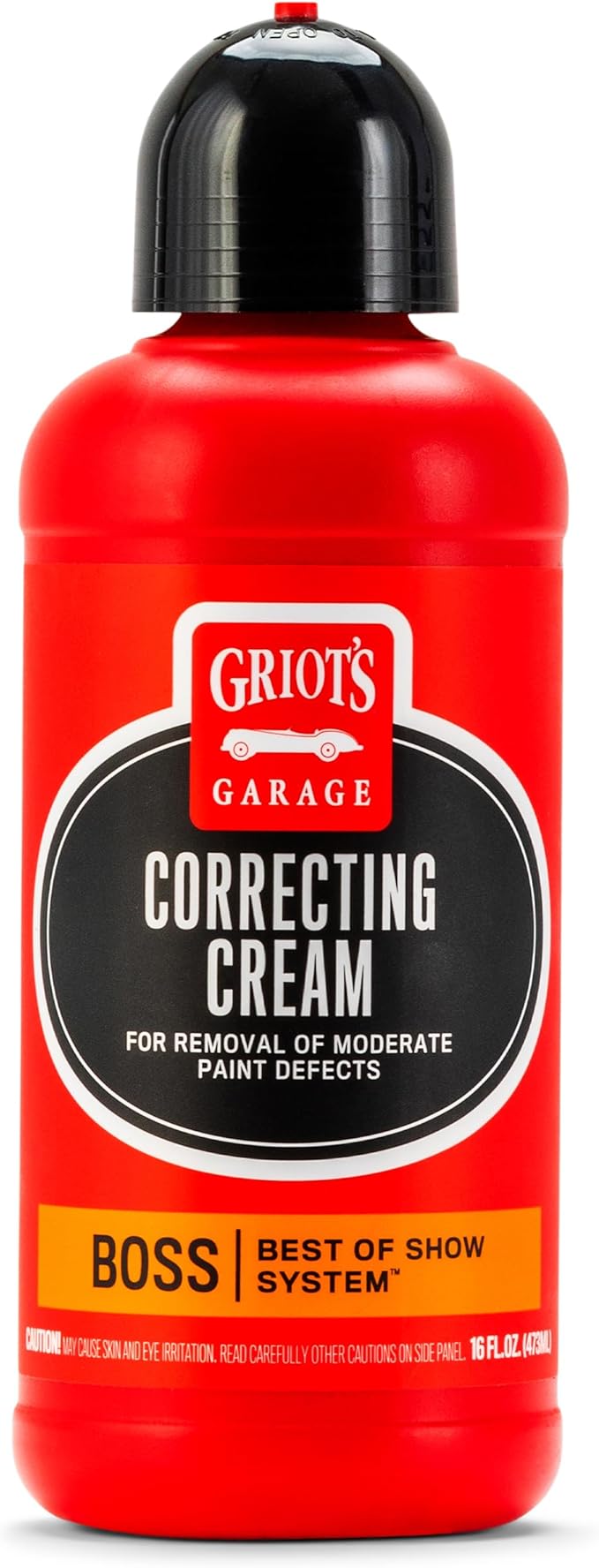
- Product Type: All-in-One Polish & Sealant
- Best For: Beginners and enthusiasts who want a simple, one-step solution to remove swirls and add protection.
- Why It’s Great for Red Cars: This AIO has enough cutting ability to remove the majority of swirls and light scratches that make red paint look dull. It finishes down with exceptional clarity, and the carnauba-based protection it leaves behind gives red a rich, warm glow. It’s a “hero” product that delivers stunning transformations in a single step.
Our Expert Take: This is arguably the best AIO on the market for accessibility and results. It’s incredibly easy to use, has a long working time, and wipes off effortlessly. Paired with an affordable random orbital polisher, this one bottle can make a red car look 90% better with minimal effort. It is the perfect starting point.
Pros:
- Corrects light to moderate swirls effectively.
- Leaves behind a beautiful, glossy layer of protection.
- Extremely user-friendly with a long work time.
- Saves a huge amount of time compared to multi-step processes.
Cons:
- Won’t remove the absolute deepest scratches.
- The protection isn’t as durable as a dedicated sealant.
2. The Enthusiast’s Two-Step System: Meguiar’s M110/M210 Compound & Polish

- Product Type: Professional Compound & Finishing Polish
- Best For: Car owners with a DA polisher who want to achieve a truly flawless, show-car finish.
- Why It’s Great for Red Cars: To get 100% defect removal, you need a two-step approach. M110 Ultra Pro Speed Compound is a fast-cutting compound that will obliterate heavy swirls and oxidation. You then follow it with M210 Ultra Pro Finishing Polish, which contains incredibly fine abrasives that remove any light haze left by the compound, refining the red paint to a level of gloss and clarity that is simply breathtaking. This combination makes red paint look like a pool of liquid color.
Our Expert Take: This is the modern, go-to combo for professional detailers. Both products have a very long working time and produce very little dust, making them a pleasure to use. They are designed for machine application (specifically a dual-action/random orbital polisher). While it takes more time, the results from this process are on a completely different level than an AIO.
Pros:
- Capable of removing very heavy paint defects.
- Finishes down to an unbelievable level of gloss and clarity.
- Easy to use, long working time, and low dusting.
- The professional standard for paint correction.
Cons:
- Requires a multi-step process, which takes more time.
- Requires a separate LSP (wax or sealant) after polishing.
3. Best Carnauba Wax for a “Wet Look”: Collinite 845 Insulator Wax
- Product Type: Hybrid Carnauba Wax & Synthetic Sealant
- Best For: Protecting your red car after polishing and achieving the ultimate “wet look” with sealant-like durability.
- Why It’s Great for Red Cars: Collinite 845 is a legendary product in the detailing community. It combines the warm, wet glow of a premium carnauba wax with the legendary durability of a synthetic sealant. When applied to a freshly polished red car, it creates a layer of depth and richness that looks a foot deep. It darkens the color slightly and produces a dripping-wet appearance that is absolutely perfect for red paint.
Our Expert Take: Don’t let the old-school bottle fool you; this stuff is liquid gold. The key is to apply it incredibly thin—a little goes a very, very long way. When applied correctly, it’s easy to remove and provides fantastic protection and beading for 4-6 months, outlasting almost every other wax on the market.
Pros:
- Creates a stunningly deep, wet, rich shine.
- Incredible durability for a wax-based product.
- Excellent value; one bottle will last for years.
- Can be used in sun or shade.
Cons:
- Can be difficult to remove if applied too heavily.
4. Best Easy-On, “Candy Gloss” Sealant: P&S Bead Maker
- Product Type: Paint Sealant / Gloss Enhancer
- Best For: The easiest way to add insane slickness, protection, and a “hard candy” gloss to your red paint.
- Why It’s Great for Red Cars: Bead Maker has become a phenomenon because of the unique look it creates. It’s a spray-on, wipe-off sealant that can be used as a standalone protectant or as a “topper” over an existing wax or sealant. On red paint, it adds an incredible level of sharpness and reflectivity, making the surface look like it’s been coated in a layer of glass. The surface also becomes ridiculously slick to the touch.
Our Expert Take: While its durability is shorter (1-2 months), nothing is easier to apply or creates a more dramatic “pop” in gloss so quickly. We use it at the end of every detail job to boost the shine to the next level. For maintaining that freshly-detailed look on a red car, Bead Maker is an absolute must-have.
Pros:
- Adds insane slickness and gloss with zero effort.
- Extremely easy to apply: just spray on and wipe off.
- Can be layered on top of any other wax or sealant.
- Great UV protection for red paint.
Cons:
- Lower durability than traditional sealants.
- Needs 8-12 hours to fully cure for best results.
Comparison of Top Car Care Products for Red Paint
| Product | Type | Best For | Look/Finish | Skill Level |
| Griot’s Correcting Cream | All-in-One Polish | Fast, effective one-step swirl removal & protection. | Warm, Rich Gloss | Beginner |
| Meguiar’s M110/M210 | 2-Step Polish System | Flawless, professional-level paint correction. | Ultimate Clarity & Depth | Intermediate |
| Collinite 845 | Carnauba/Sealant Hybrid | Long-lasting protection with a deep, “wet” look. | Dripping Wet Glow | Beginner |
| P&S Bead Maker | Spray Sealant | Maximum gloss, slickness, and easy maintenance. | Sharp “Candy” Gloss | Beginner |
Step-by-Step Guide: How to Polish Your Red Car for Jaw-Dropping Results
The product is only 20% of the equation; proper technique is the other 80%.
What You’ll Need:
- Supplies:
- Two wash buckets with Grit Guards
- Quality car shampoo
- Clay bar or synthetic clay mitt
- Iron remover spray
- A quality All-in-One polish (like Griot’s Correcting Cream)
- A quality wax or sealant (like Collinite 845)
- Isopropyl alcohol (IPA) diluted 1:4 with distilled water
- High-quality microfiber towels
- Detailing tape
- Tools:
- A quality random orbital polisher (a must-have for great results)
- Foam polishing pads
The Process:
- The Ultimate Wash: Wash your car thoroughly using the two-bucket method to prevent adding more scratches. Do not wash in direct sunlight.
- Chemical Decontamination: While the car is still wet, spray an iron remover on the paint. You will see it turn purple as it dissolves embedded iron particles. Rinse thoroughly.
- Mechanical Decontamination: Use a clay bar or clay mitt with a lubricant to remove any remaining bonded contaminants. The paint should feel as smooth as glass. This step is essential for good polishing results.
- Dry and Tape: Dry the vehicle completely. Use detailing tape to mask off any sensitive plastic trim, rubber seals, and panel edges.
- The Polishing Stage: Apply 4-5 pea-sized drops of your AIO polish to a foam pad on your polisher. Work in small, 2’x2′ sections. Using a medium speed (3-4 on the dial), move the polisher in slow, overlapping passes (a “cross-hatch” pattern) until the polish turns clear.
- Wipe & Inspect: Use a clean microfiber towel to wipe away the polish residue. Use a flashlight to inspect your work. The swirls and dullness should be gone, replaced by a brilliant gloss. Repeat this process around the entire car.
- Protection: For maximum durability and shine, you can now apply your dedicated LSP. Apply a very thin, even coat of your chosen wax or sealant (like Collinite 845). Let it haze for the recommended time, then buff off with a fresh microfiber towel.
(Internal Linking Suggestion: Link to an article titled “How to Use a Random Orbital Polisher: A Beginner’s Guide”.)
Red Paint Problems & How to Solve Them
- Faded, Oxidized Red Paint: Common on older, pre-2000s cars with single-stage paint (no clear coat). You’ll notice your polishing pad turning red. This paint can be brought back to a brilliant shine with a heavy-duty polish or compound, which removes the dead, oxidized top layer.
- Swirl Marks: These are microscopic scratches that look like a spiderweb in direct sunlight. They are caused by improper washing and drying. Polishing is the only true way to remove them permanently.
- Water Spots: If left too long, minerals in water can etch into your clear coat. Minor spots can be polished out; severe ones may require compounding.
Frequently Asked Questions (FAQ)
- So I should absolutely avoid Turtle Wax Color Magic and other colored waxes?
Yes. From a professional standpoint, these are gimmick products that mask problems instead of solving them. You will achieve infinitely better and longer-lasting results by using a real polish and a quality protectant. - How often should I polish my red car?
Polishing is an abrasive process, so it should only be done when needed—typically once every 1-3 years to remove accumulated swirl marks. You should, however, wax or seal your car every few months to keep it protected. - Can I polish my car by hand?
You can, but it is incredibly labor-intensive and will not produce the same level of defect removal as a machine. Applying a polish by hand is more of a deep clean than true paint correction. A good quality, entry-level random orbital polisher is a very worthwhile investment. - My car has single-stage red paint. Is the process different?
The process is the same, but be prepared for your pads to turn red as you remove the oxidized paint. Single-stage paint can be restored to a spectacular deep gloss, but it is often softer than modern clear coats, so start with a less aggressive polish. - What’s the #1 mistake people make when trying to make their red car shine?
Skipping the decontamination (clay bar) step. If you try to polish a contaminated surface, you’ll be grinding that grit into your paint, creating more scratches. The clay bar step is non-negotiable for a great finish. - Which is better for red cars: wax or a ceramic-infused sealant?
It’s personal preference. If you love the deep, warm, wet look and don’t mind reapplying every couple of months, go with a high-quality carnauba wax like Collinite 845. If you prefer a sharp, glassy shine and want longer-lasting protection, a ceramic-infused sealant like P&S Bead Maker is an excellent choice. - Do I really need to use an Isopropyl Alcohol (IPA) wipe down after polishing?
While not mandatory when using an AIO, it’s highly recommended if you are doing a two-step polish and applying a separate sealant. The IPA wipe removes any leftover polishing oils, ensuring the paint is perfectly clean so your sealant can form the strongest possible bond to the surface. - Can I just use the wax without polishing first?
Absolutely. If your paint is already in good condition, you can go straight to the wax/sealant step after washing and decontaminating. Polishing is specifically for removing defects.
Conclusion: It’s the Process, Not a “Magic” Color
Making your red car radiate with a deep, flawless shine is not about finding a magic red-colored polish. It’s about understanding and respecting the professional process: thorough decontamination, true paint correction with a quality abrasive polish, and locking in that perfection with a durable, high-gloss wax or sealant.
For 90% of car owners looking to bring their red car back to life, a simple one-step polish with an All-in-One like Griot’s Garage Correcting Cream is all that’s needed to create a dramatic transformation. Protect that fresh finish with a legendary wax like Collinite 845, and you’ll have a red car that doesn’t just look clean—it will look absolutely stunning. Ditch the gimmicks, invest in the right process, and prepare to be blown away by your car’s true color.

Tamim Hasan is the Founder and Lead Automotive Reviewer at RevivalCar.
With 5+ years of hands-on experience testing car accessories, tools, and
automotive gadgets, Tamim brings practical expertise to every review. His
mission is simple: help drivers find products that actually work through
real-world testing, not marketing hype.